
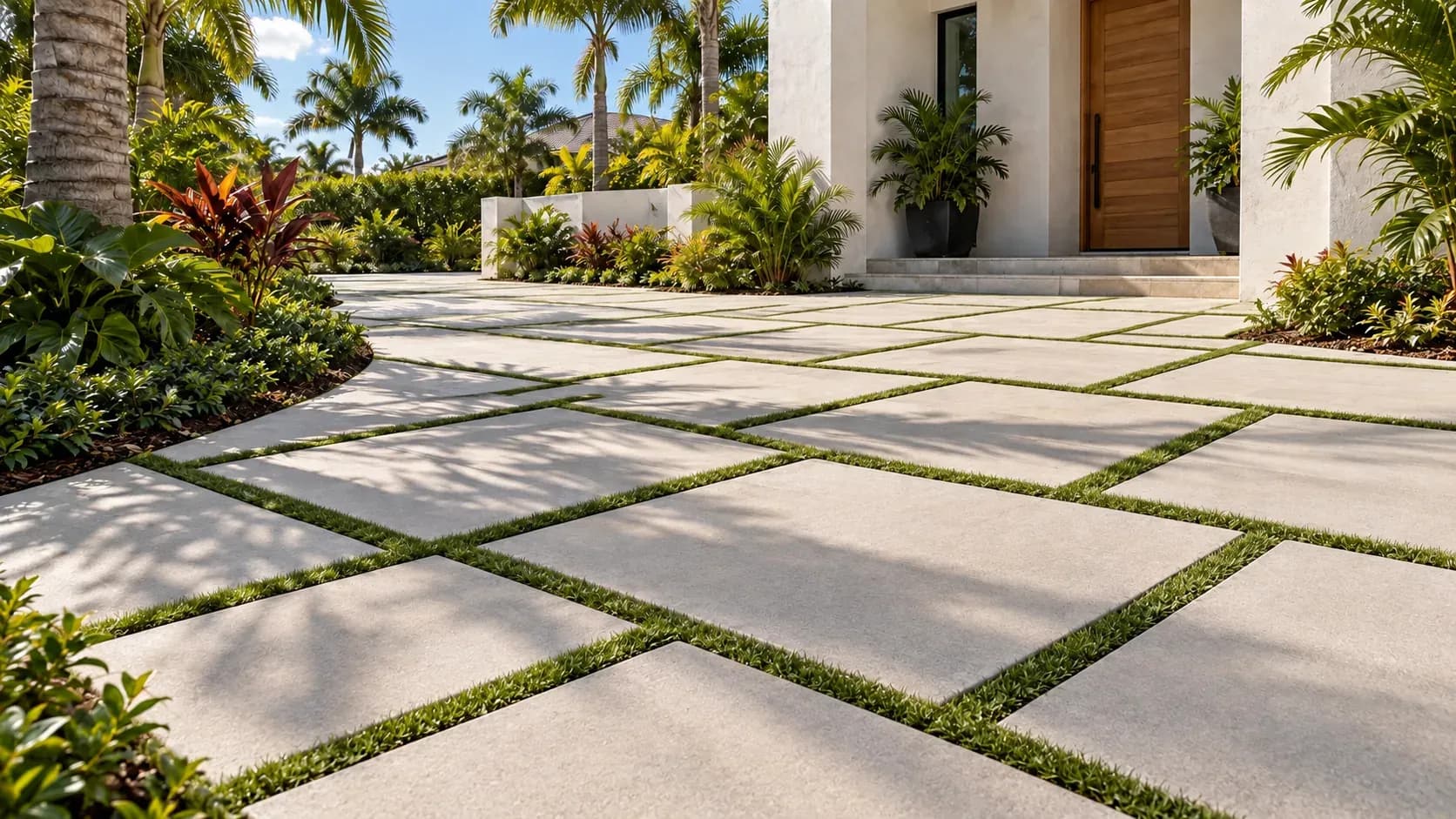
Grass joints between pavers and slabs
Grass joints place vegetation between pavers, slabs, or open concrete grid units. They can soften a driveway, courtyard, path, or overflow area, but the planted look depends on the pavement assembly and living material. Sun, soil, irrigation, traffic, joint width, drainage, and maintenance all affect the result.
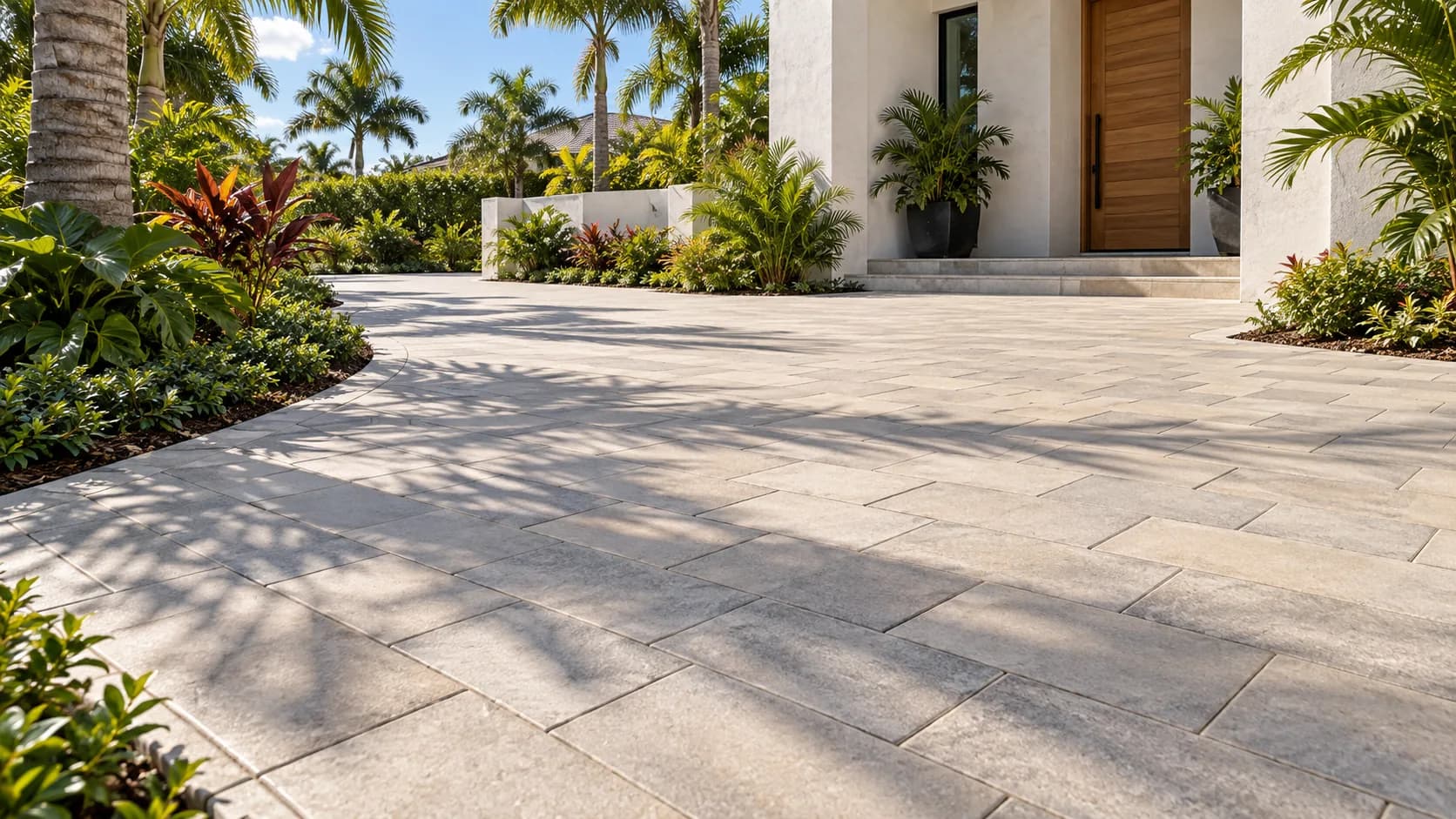
Three details can look similar in a photograph
Narrow planted joints between large slabs, spaced individual pavers, and manufactured concrete grid units can all create green lines or openings. They are not the same construction. Each uses different unit geometry, support, planting volume, edge conditions, and traffic assumptions.
The section detail should show the unit, joint or opening, planting medium, bedding, base, edge restraint, and drainage path. A reference photo can establish the desired appearance, but not whether the pictured assembly suits another site.
Planted joints are not automatically permeable pavement
Water may enter through a planted opening, but stormwater performance depends on the layers below and where the water goes. EPA describes permeable pavement as a designed system whose surface and supporting layers manage stormwater. A conventional base under grass-jointed slabs may drain differently from an open-graded reservoir with infiltration or an underdrain.
If runoff control is a project requirement, identify the complete system, contributing drainage area, storage or infiltration path, outlet, overflow, and maintenance. The presence of grass does not verify infiltration capacity.
Traffic can conflict with plant growth
Grass joints are not automatically rated for vehicle loads. Repeated tire paths, turning, braking, parked vehicles, and engine heat can compact planting material or damage vegetation. CMHA notes that grass-filled concrete grids fit intermittent or overflow parking better than areas covered by vehicles throughout the day.
The pavement units and base must also suit the expected traffic. Separate wheel paths, occasional crossing zones, pedestrian areas, and decorative planting on the plan. Where traffic is too frequent for grass, a grid system may use an appropriate aggregate fill instead, subject to its design.
Growing conditions control the appearance
Grass needs adequate light, root space, water, air, and a species suited to the exposure. Shade from buildings or parked cars, reflected heat, irrigation coverage, salt, foot traffic, and landscape runoff can create uneven growth. Narrow joints also dry and compact differently from a lawn.
The planting plan should name the vegetation or selection process and address establishment, mowing or trimming, irrigation, weeds, fertilizer if used, reseeding, and replacement. The finished surface will change with seasons and maintenance; it will not remain identical to an installation photograph.
Edges and upkeep need access
Soil and mulch from adjacent beds can wash into joints, while trimming equipment can mark paver edges. Garage thresholds, walks, drains, curbs, and utility covers need details that retain soil and keep circulation usable. Solid walking routes may be preferable where narrow heels, wheeled mobility, carts, or frequent pedestrian traffic cross the area.
Maintenance responsibilities should be assigned before installation. Keep the product, planting, and fill information with the project record so a failed section can be restored with compatible materials.
- Distinguish planted joints, spaced pavers, and concrete grid units in the scope.
- Map wheel paths, turning areas, shade, irrigation, and pedestrian crossings.
- Treat permeability and load capacity as designed properties, not visual assumptions.
Common questions
Are grass joints always a stormwater solution?
No. Water movement depends on the joint, bedding, base, soil or underdrain, outlet, overflow, and maintenance. Grass alone does not make the pavement a verified permeable system.
Can every grass-joint area carry vehicles?
No. The units, base, edges, traffic frequency, turning, and planting design must fit the intended use. Frequent parking can also prevent healthy grass growth even when the pavement supports the load.
Further reading
Same place. Another finish.
Slide to compare design options across the same view.
Drag or use your keyboard arrows.