
How an interlocking concrete paver system works
Concrete pavers are individual manufactured units installed as a pavement assembly. Joints, bedding, base, drainage, and edge restraint support the visible units. Selecting only a color and shape leaves the main construction decisions unresolved.
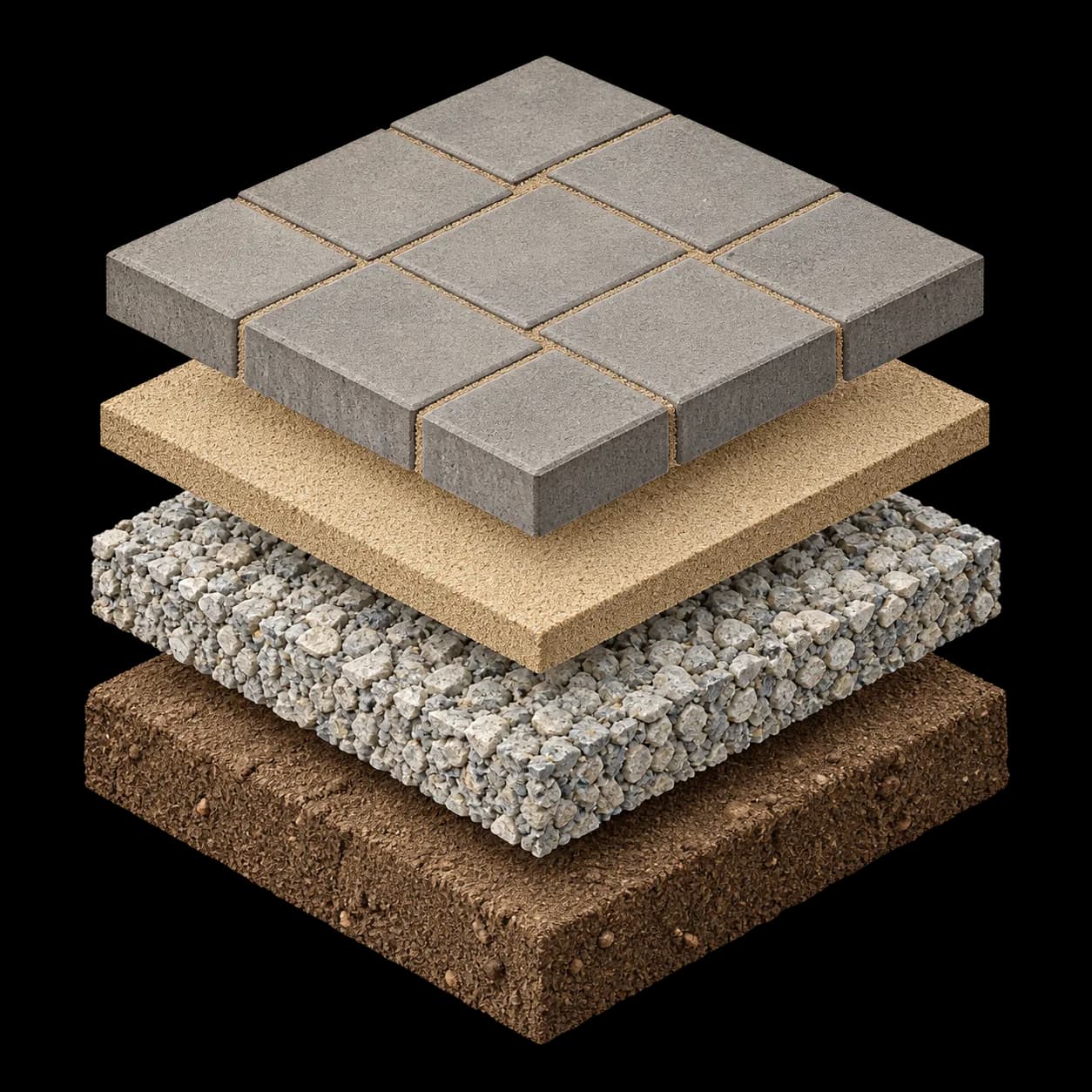
The paver is the visible component
Interlocking concrete pavement uses closely placed concrete units over a prepared bedding layer and base. Joint material fills the spaces between units, and edge restraints hold the field in place. CMHA defines interlock as the units' inability to move independently from their neighbors. That behavior comes from the system, not from a single heavy paver.
Unit shape, thickness, finish, and color still matter. Pedestrian paths, residential driveways, pool decks, and commercial vehicle areas place different demands on the surface. The intended traffic and application should be identified before choosing the unit.
Bedding and joint material have separate roles
The bedding course provides a consistent setting layer for the units. Joint material fills the narrow spaces between them and helps transfer forces across the surface. Standard interlocking pavement commonly uses sand in the joints, while permeable interlocking pavement uses open joints filled with small, clean aggregate so water can pass through.
These materials are not interchangeable fill. CMHA specifications distinguish bedding and joint gradations and caution against unsuitable materials such as stone dust for standard bedding. The selected system should name each layer and its material rather than referring to everything below the paver as sand.
The base follows the site and traffic
The base supports the surface and distributes loads to the prepared ground. Its design depends on soil, drainage, expected vehicles, and the chosen pavement system. A patio used by people does not create the same demands as a driveway where tires turn or a commercial approach that receives service vehicles.
Existing settlement, loose edges, pumping sand, or repeated low spots may point below the pavers. Resetting only the visible units can improve alignment, but it will not correct a base or drainage problem unless that part of the assembly is included in the work.
Edges, cuts, and transitions complete the field
Stable edge restraint helps preserve horizontal interlock. Borders can serve that technical role while also framing the color or pattern, but the edge detail must suit the surrounding material and traffic. Curbs, slabs, buildings, drains, asphalt, and planted beds each create a different transition.
Small cuts and crowded geometry can weaken the visual result and complicate installation. CMHA guidance advises planning pattern lines and avoiding undersized cut units in vehicle areas where practical. A scaled layout helps locate borders, curves, drain openings, columns, and utility covers before paving begins.
Modular surfaces allow targeted access
Individual pavers can be removed and reinstated to reach utilities or repair a localized deformation. That is useful only when the units are lifted carefully, the underlying cause is repaired, and bedding, joints, alignment, and compaction are restored. Reusing units may also reveal color differences between weathered pavers and replacements.
For planning, record the unit manufacturer and style if known, retain spare pieces when practical, and photograph the original pattern before removal. A complete estimate should describe the surface units, border, joint material, edge restraint, base work, drainage details, and transitions.
- Identify pedestrian, passenger-vehicle, and heavier service-vehicle areas.
- Show every fixed edge, drain, utility cover, curve, step, and adjoining pavement.
- Compare full-size samples from the expected color range, not one ideal unit.
Common questions
Are concrete pavers installed directly on sand?
A typical interlocking system uses pavers over a controlled bedding layer and a prepared base, with joint material and edge restraints completing the assembly. The exact layers depend on the application, soil, drainage, and traffic.
Can sunken pavers simply be reset?
Sometimes, but the cause matters. Bedding disturbance, base movement, drainage, roots, or an unstable edge may need correction first. Resetting the units without addressing the cause can allow the low area to return.
Further reading
The pattern changes the space.
Try a layout, a tone, and the visual spacing between joints.
Layout study. The actual unit and joint are specified for each project.
Alternating rows offset the joints by half a unit.