
Concrete finishes for driveways, walks, and patios
A concrete finish affects texture, traction, where water collects, and how later repairs may look. Choose it with the space's use, surrounding materials, drainage, joints, and maintenance in mind.
Start with the surface's job
Driveways, walkways, patios, and utility slabs need different finishes. Exterior flatwork needs a texture suited to foot or vehicle traffic without becoming needlessly slick when wet. NRMCA notes that the required texture, smoothness, and durability depend on the slab's use.
Look at how people move through the area, where vehicles turn, whether pool water or irrigation reaches the slab, and how the concrete meets doors, curbs, pavers, or asphalt. Those conditions narrow the useful choices faster than a color board alone.
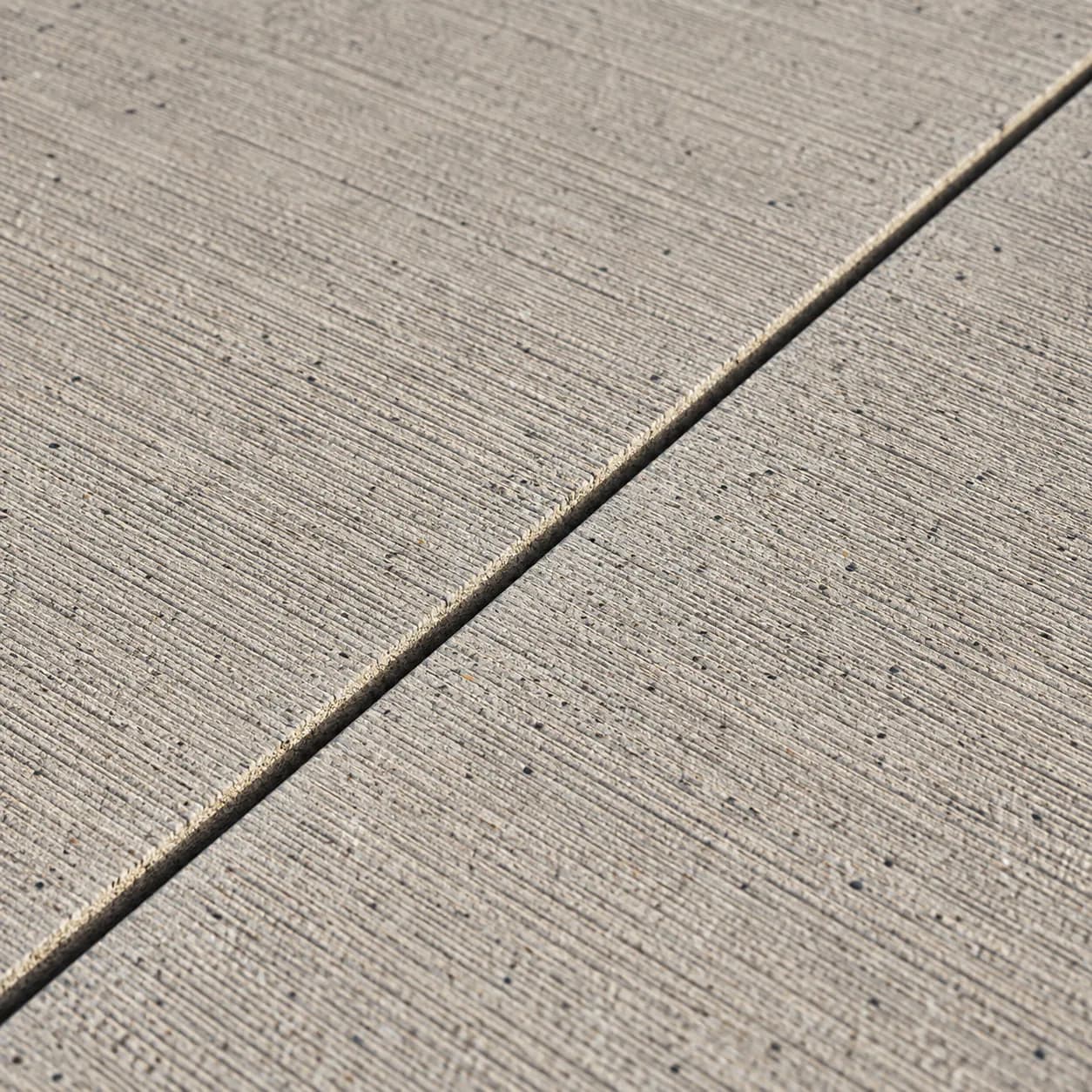
Broom finish: direct and textured
A broom finish uses stiff bristles on fresh concrete to leave fine parallel ridges. The texture is easy to recognize and works with many residential and light commercial settings. The direction and depth of the broom marks affect the finished appearance, so the plan should state how the lines run and where separate placements meet.
Broom texture does not replace proper slope, joints, curing, or preparation. It is the exposed face of the slab. The surface below still needs a layout that manages water and planned cracking.
Exposed aggregate and decorative finishes
Exposed aggregate removes or retards part of the surface paste so selected stone becomes visible. The result can add color and a pronounced texture, but the aggregate selection and amount of exposure shape both the appearance and feel. A small sample is more useful than a distant photograph because aggregate, cement color, and light all change the appearance.
Stamped, colored, or patterned concrete can relate a slab to nearby stone, pavers, or architecture. The pattern scale, border layout, joint locations, and color variation should be reviewed together. Decorative work still behaves as concrete, so the design should not hide necessary joints or drainage transitions merely to preserve a pattern.
Smooth finishes have narrower exterior uses
Steel-troweled concrete produces a smoother face often associated with interior floors. NRMCA cautions that repeated troweling can create a surface that is slippery when wet, which is one reason exterior driveways and walks usually use another texture. Any smooth exterior option must suit the area's water exposure and use.
Sample the finish and document the details
Before pricing decorative work, define the finish, color range, border, joint approach, adjacent materials, and areas that receive the most water or traffic. Document expected variation and how a future patch may differ from the original surface. A sample can confirm texture and color direction, but it cannot reproduce every field condition.
Curing begins after placement and finishing. NRMCA explains that moisture and temperature conditions during curing help concrete develop the properties intended by the mixture. Coordinate finish selection, placement timing, and curing in the work plan.
- Mark broom direction, borders, and pattern orientation on the layout.
- Show joints, drains, steps, walls, and material transitions in reference photos.
- Review a physical sample for decorative color and texture decisions.
Common questions
Which concrete finish is best for a driveway?
There is no single finish for every driveway. A broom finish is a common, direct choice; exposed aggregate and decorative finishes add visual detail. Vehicle movement, water exposure, surrounding materials, joint layout, and maintenance should guide the selection.
Will a sample match the finished slab exactly?
A sample helps confirm the intended range and texture, but concrete materials, placement conditions, curing, and light can create variation. Use the sample as an approved direction and document which differences are expected.
Further reading
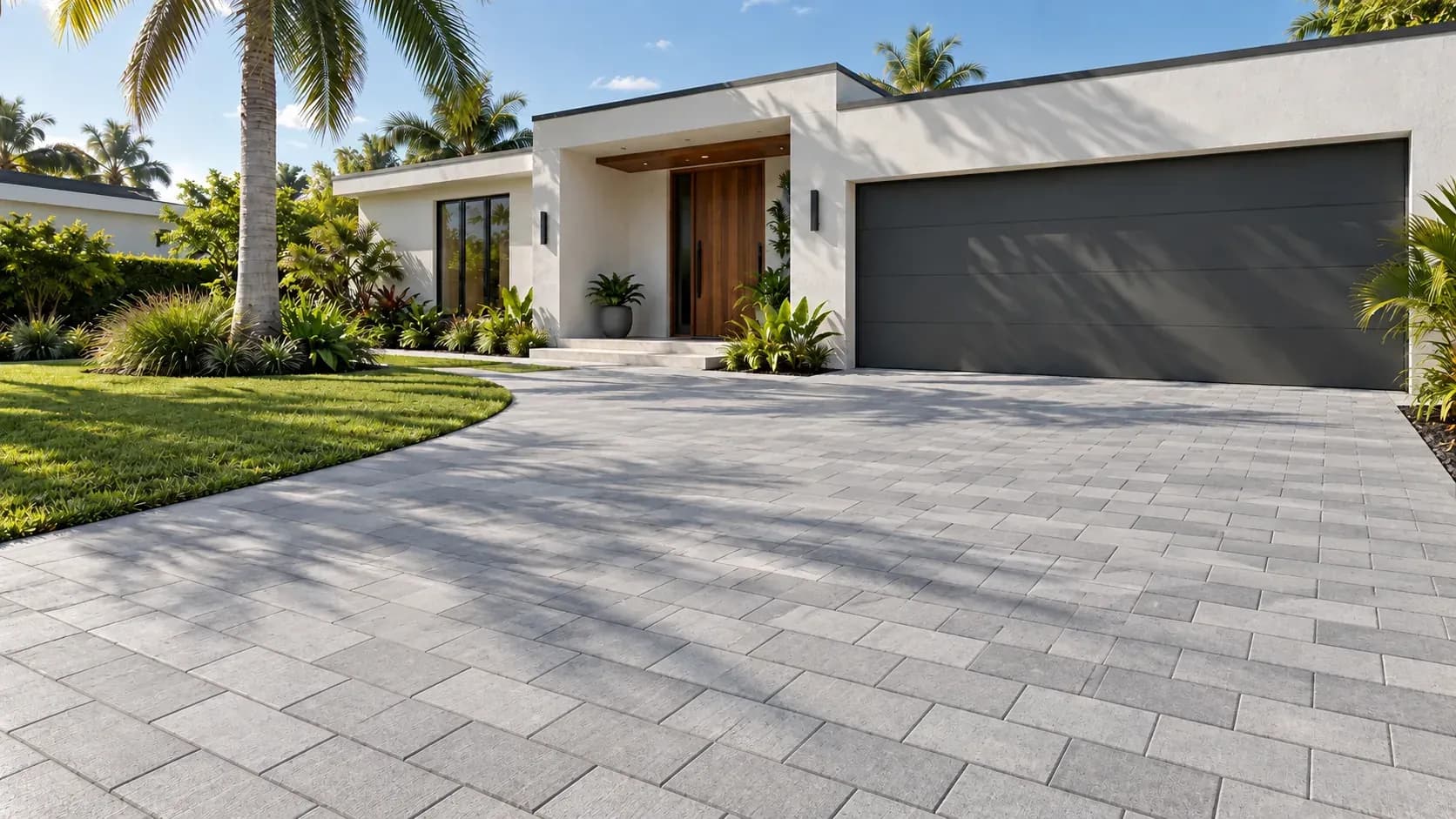
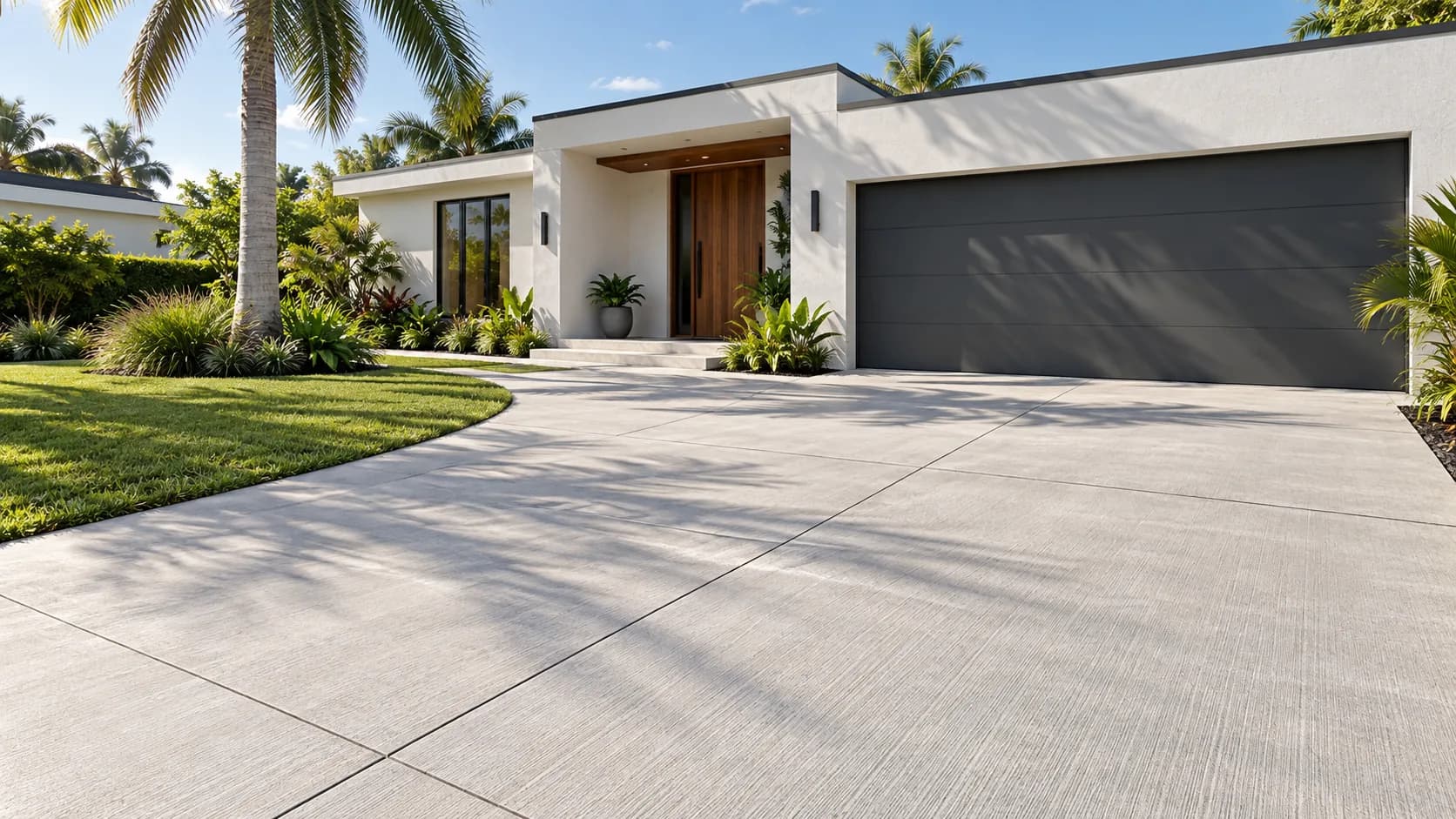
Same place. Another finish.
Slide to compare design options across the same view.
Drag or use your keyboard arrows.