
Asphalt mixes: hot, warm, and reclaimed options
Asphalt mixtures combine graded aggregate with asphalt binder, then are placed and compacted for the project conditions. Mix, temperature, aggregate, binder, and recycled content must suit the site, traffic, weather, haul, and available plant supply.
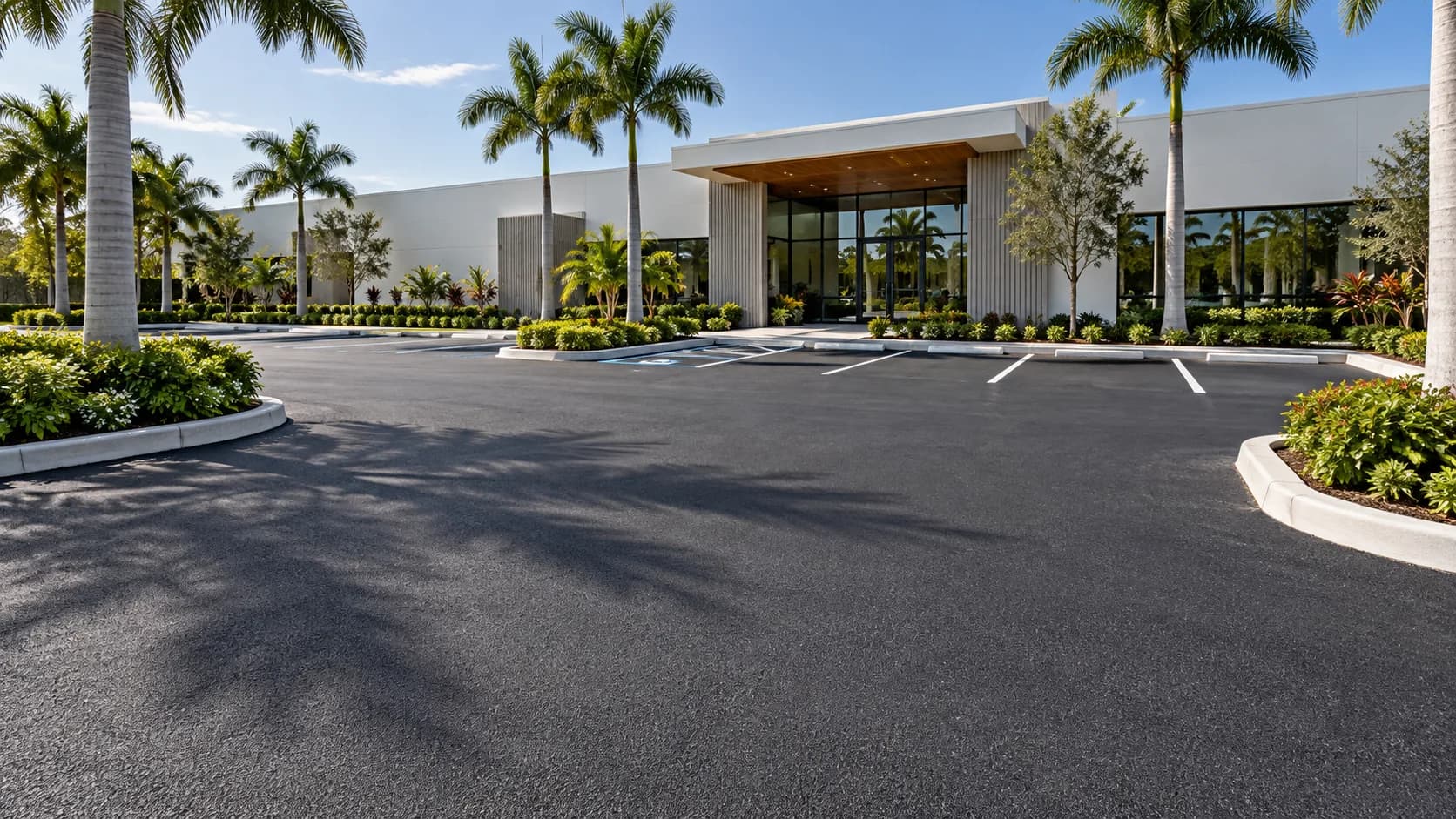
Hot-mix asphalt
Hot-mix asphalt, or HMA, is the traditional process. Aggregate and asphalt binder are heated and mixed so the binder coats the stone. The mixture is delivered, spread, and compacted while workable, then cools into pavement. HMA is widely used, but its exact design still matters.
A driveway, small parking lot, and heavy-vehicle access lane may call for different aggregate gradations, binder choices, or layer arrangements. Temperature, lift thickness, compaction, drainage, and the supporting ground all affect the work. The material name alone does not define the finished pavement.
Warm-mix asphalt
Warm-mix asphalt, or WMA, uses technologies that lower the temperatures needed to produce and place an asphalt mixture. FHWA describes WMA as a group of technologies rather than one recipe. Depending on the system and conditions, lower temperatures can reduce plant fuel use and fumes, extend the workable paving window, or assist compaction.
WMA still needs a suitable mix design, consistent plant production, prepared support, correct placement, and adequate density. A lower production temperature does not repair a weak base or solve trapped water. Availability also depends on the supplier, plant, specifications, and project size, so a guide to WMA should not be read as a promise that it is offered for every job.
Reclaimed asphalt pavement
Reclaimed asphalt pavement, or RAP, is processed material recovered from existing asphalt. FHWA explains that RAP can be combined with virgin aggregate and new binder in a designed mixture. Its aggregate gradation, existing binder, moisture, and consistency must be considered when the producer develops the blend.
Recycled content does not mean material removed from one property can automatically return to that project. The proposed amount depends on the RAP stockpile, target mixture, producer controls, and applicable specifications. Evaluate the proposed mixture and its controls rather than judging quality by recycled content alone.
Aggregate structure and compaction
Gradation describes the distribution of aggregate sizes in the mixture. Dense-graded mixtures use a range of sizes that pack together, while open-graded mixtures leave more connected void space for a specialized purpose. Binder holds the aggregate structure together, but excess or insufficient binder does not substitute for a balanced mixture design.
Compaction brings the placed mixture to its intended density while it remains workable. Mat temperature, roller pattern, lift thickness, confined edges, hand-worked areas, and the support below can affect density. More rolling is not automatically better, and a cold mixture cannot be restored simply by repeated passes. The paving plan should account for delivery, placement width, edges, and access for compaction equipment.
Compare the full pavement proposal
Identify whether the work is new pavement, an overlay, a repair, or a combination. Compare expected vehicle loads, existing base and drainage, surface elevations, delivery access, reopening needs, and local requirements. If the base is weak or water is trapped below the surface, changing the mix alone may not solve the problem.
The proposal should name the intended mixture or performance specification, layer arrangement, preparation, transitions, and quality checks. It should distinguish confirmed choices from options that depend on the site visit, producer, or governing specification.
- Identify the mix family and aggregate structure proposed for each paved area.
- Confirm how delivery, placement, and compaction will reach narrow or confined sections.
- Keep mix selection separate from base repair and drainage decisions.
Common questions
Is warm-mix asphalt always better than hot-mix asphalt?
No. WMA can offer production and placement advantages, but suitability depends on the project, technology, plant, weather, haul, mix design, and specifications. Both families still require proper preparation, placement, and compaction.
Does reclaimed asphalt mean lower quality?
Not automatically. Properly designed mixtures containing RAP can perform well. The reclaimed material must be characterized and blended to meet the target mixture and applicable controls.