Permits and inspections for South Florida paving
A driveway estimate and a permit are different decisions. An estimate defines a proposed scope. The authority with jurisdiction decides whether that scope needs building, zoning, engineering, drainage, tree, or right-of-way review. Start with the exact address, because Miami-Dade and Broward cities publish different rules for private paving, driveway approaches, sidewalks, swales, parking areas, and public streets. Kendall is especially important: it is commonly used as a place name, but an unincorporated Kendall address follows Miami-Dade County rather than a City of Kendall.
Start with the property line
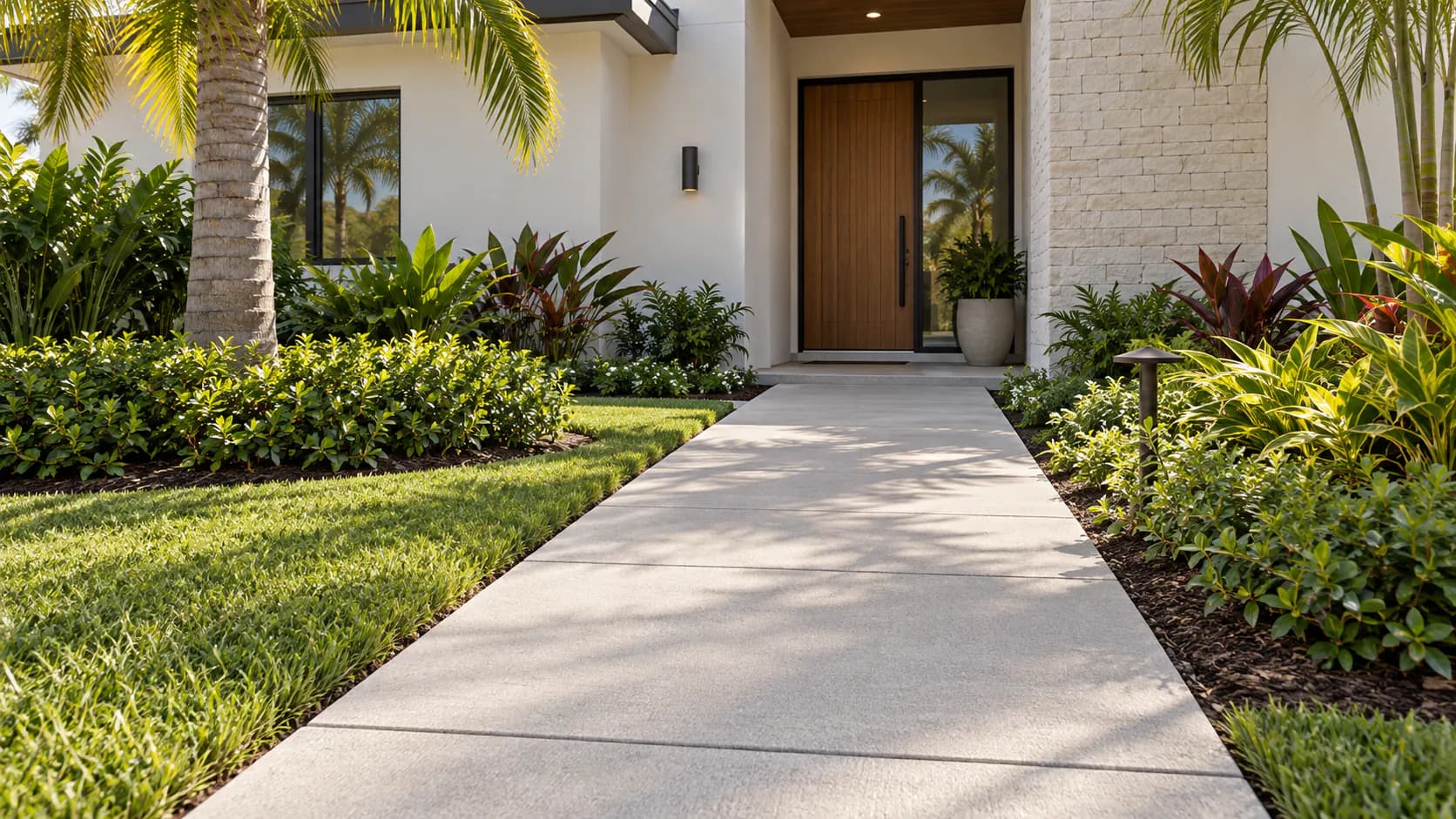
A driveway inside private property can still require a building or zoning permit. The approach between the property line and street can involve Public Works or Engineering because it may affect a curb, sidewalk, swale, drainage, or public right-of-way. Do not assume a permit for private paving authorizes a curb cut or public-area work.
- Confirm the incorporated city or unincorporated county jurisdiction.
- Mark private pavement, approach, sidewalk, swale, easements, and street edge on a current survey.
- Describe the material, dimensions, drainage path, and proposed access changes.
Build a permit-ready scope
Cities commonly ask for a current survey and a dimensioned site plan. Depending on the address, they can also request contractor credentials, owner-builder documentation, drainage plans, tree information, HOA approval, a Notice of Commencement, or a covenant for a nonstandard finish. Commercial and multifamily work can add zoning, site-plan, engineering, traffic, or drainage review. Those are jurisdiction decisions, so submit the actual project scope instead of selecting a residential driveway category for a parking-lot project.
Plan the work around inspections
The issued permit controls the inspection sequence. A typical paving project may need an inspection before paving is covered and a final inspection after the surface, apron, sidewalk, swale, or restoration work is complete. A right-of-way permit can have separate Public Works inspections. Keep approved plans and the permit available at the site, and do not schedule work that prevents an inspector from seeing a required condition.
Treat published fees as date-sensitive
Some cities publish fixed driveway or approach fees. Others calculate a fee from construction value, plan-review category, public-area scope, or a surcharge. A fee schedule can change each fiscal year. The city permit guide linked from the area page identifies the official source reviewed on September 18, 2026, but the applicant should confirm the exact fee and category before filing or paying.
Use an estimate to organize the submission
Bring the survey, photos of the street connection and drainage, material choice, and HOA documents to the project discussion. That makes the construction scope clearer. It does not replace municipal review or promise that a permit will be issued.
Common questions
Does every new driveway need a permit?
Do not assume a universal rule. Several local authorities publish driveway or paving permit routes, but the exact requirement depends on jurisdiction, scope, and whether work affects public areas. Confirm with the authority for the address.
Who inspects the driveway approach?
When an approach affects a public right-of-way, the local Public Works or Engineering authority can have its own permit and inspection process. Follow the issued permit, not a general construction schedule.