
Read the water before choosing a surface
A new surface changes what water meets, but the material alone does not decide where rain goes. Start by observing the property during ordinary weather. Those observations help the team discuss edges, slopes, drains, and the layers beneath the finish without turning a photo into an engineering conclusion.
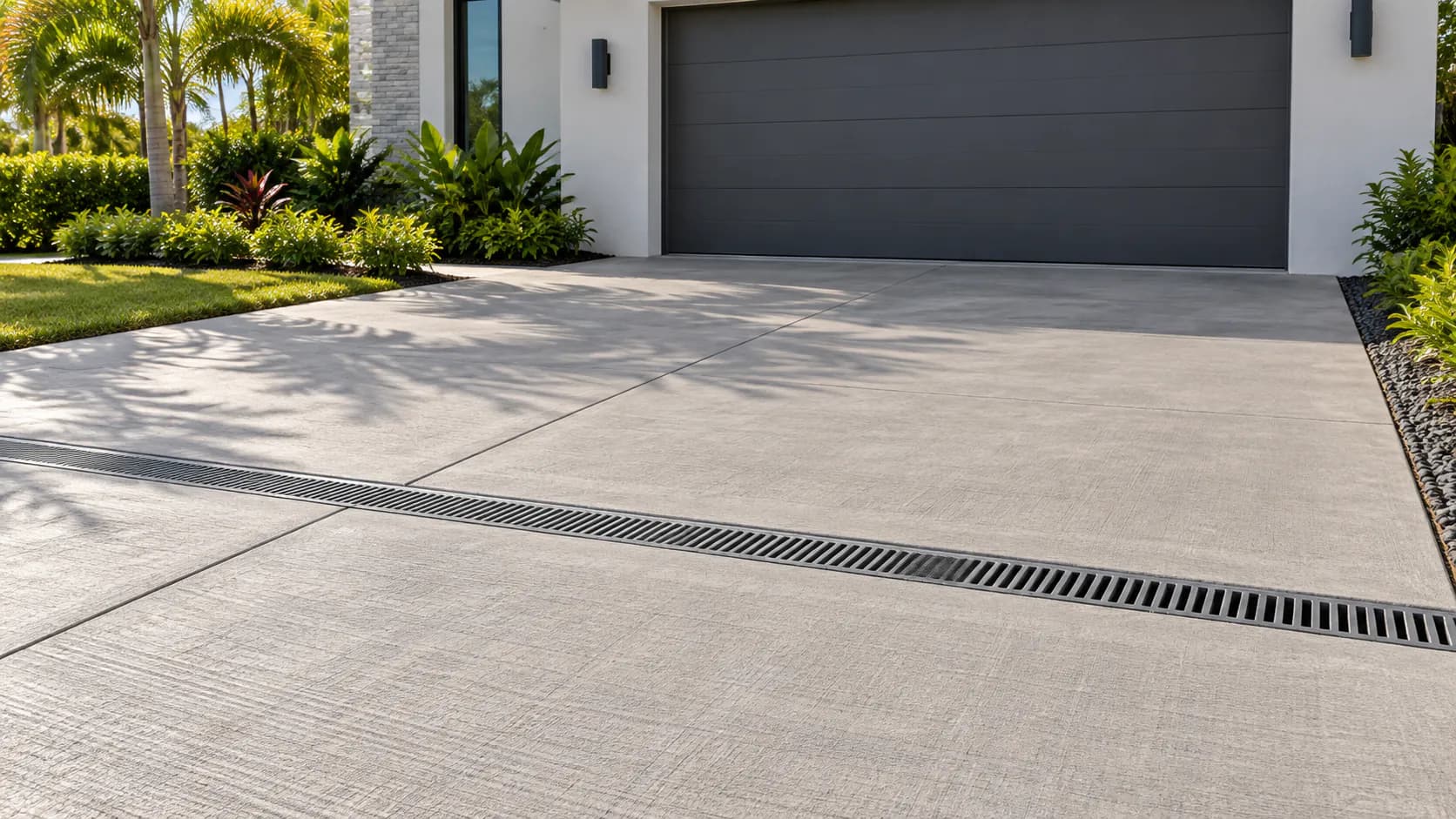
Make a rain record
After a normal storm, photograph the full area from a dry, safe position. Show the house, garage, sidewalk, lawn, street, and the place where water collects. Add a closer view only after the wide view makes the location clear. Note whether the same place becomes wet repeatedly or only after an unusual event.
Record what you can observe, not what you think caused it. Useful notes include where runoff arrives, which edge stays damp, whether a downspout points toward the surface, and which route people or vehicles need to keep open.
- Where water appears first
- Where it collects or leaves the property
- What must stay dry or accessible
- Whether the observation repeats after ordinary rain
Follow every connection
Water rarely stops at the visible paving boundary. Look at the garage threshold, doorways, walkways, planting beds, retaining edges, drains, curbs, and neighboring surfaces. Ask how the proposed work will meet each connection, especially if the new surface ends beside an existing low point.
The safest question is specific: what will happen to water at this edge? It keeps the discussion tied to the property rather than to a broad promise about a material. A different finish may change the surface, but it does not remove the need to review the surrounding grades and outlets.
Separate permeable systems from ordinary joints
Pavers can be installed in several assemblies. Ordinary joints do not automatically make a surface a permeable pavement system. EPA describes permeable interlocking concrete pavement as manufactured units with openings that contain permeable aggregate, installed over aggregate layers that can temporarily hold stormwater.
If a permeable option is discussed, ask which system is proposed, where water is intended to move, and what maintenance it requires. The answer should address the layers below the surface and the site conditions, not only the appearance of the units.
Ask for a drainage conversation
Bring your rain record to the estimate review. Ask which observations the team can address from photos and which require a site assessment. Ask how the proposal describes drainage work, surface connections, and items that remain subject to existing conditions.
Keep drainage in the same conversation as material choice. FHWA notes that pavement systems use bases, subbases, subgrades, and sometimes drainage features whose design depends on conditions. This is why a material comparison should include the support and water path around it.
Keep the record with the scope
Save the photos, notes, and the written response together. If the project changes, update the record so the new surface, drainage items, retained areas, and open questions stay aligned. This makes it easier to compare proposals without treating one isolated sentence as the whole plan.
Do not promise yourself a result that the review has not established. A clear record improves the next decision while leaving site-specific design questions with the people responsible for evaluating the property.
Common questions
Do pavers always solve a drainage problem?
No. Conventional pavers and permeable interlocking systems are different assemblies, and neither replaces a site review. Ask how the proposed surface, underlying layers, edges, and outlets will handle the conditions you observed.
Should I photograph water while it is raining?
Only from a safe, dry position. Photos during or after ordinary rain can show the path and location, but they do not establish the cause or final elevations.