
Start with how you use the driveway
A driveway material should fit the property and the way people use it. Before comparing finishes, list the vehicles that park there, where they turn, and how pedestrians reach the entrance. Include delivery access, gates, garage doors, and any space you want to keep available.
Bring photos and a simple sketch to the site visit. Explain what bothers you about the existing driveway: uneven areas, awkward parking, visible repairs, or water collecting near the house. These details give the contractor a clearer problem to solve than a request for a different surface.
Compare the finished appearance
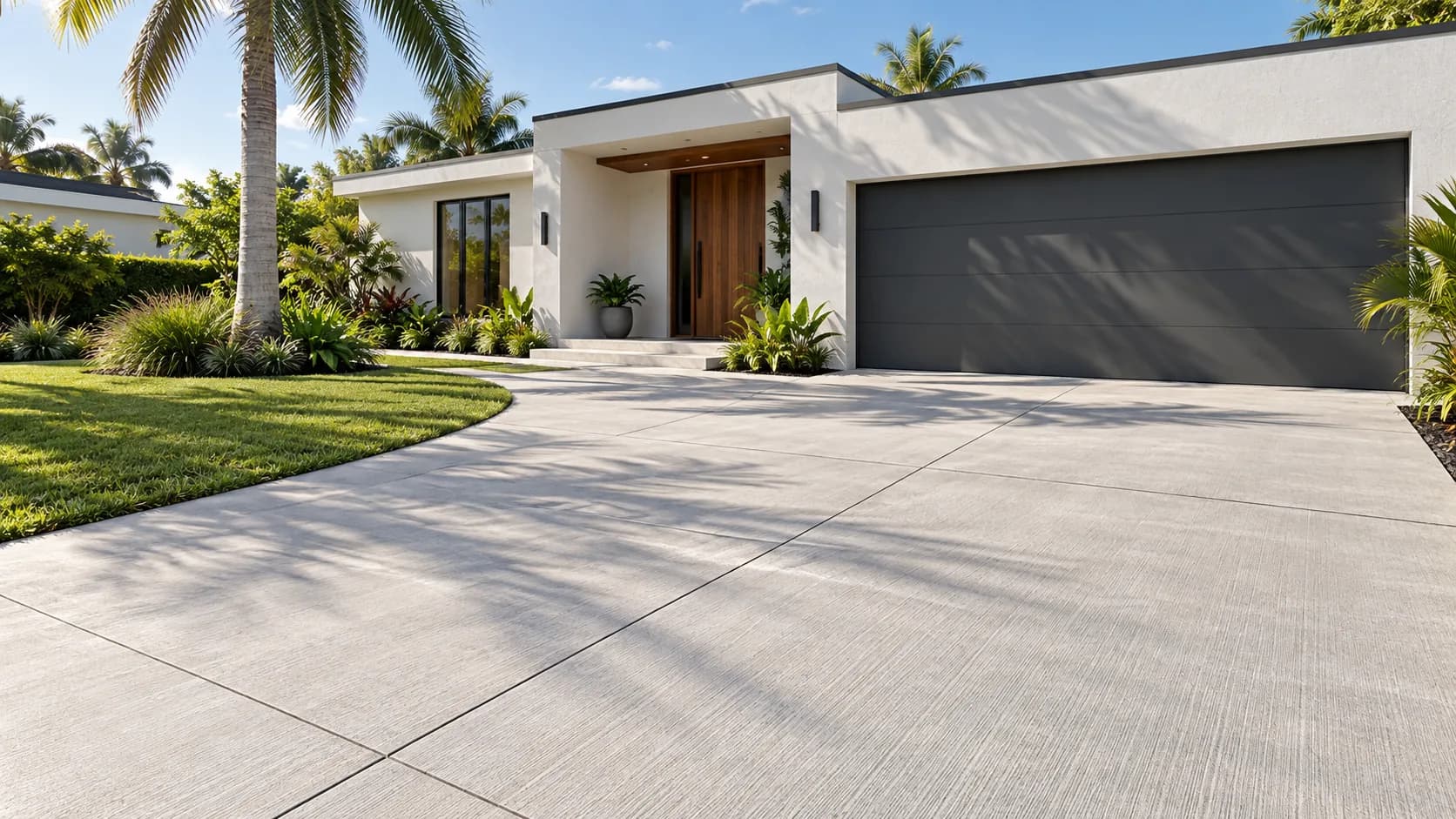
Concrete can provide a continuous surface with a joint pattern that becomes part of the design. Asphalt offers a dark, continuous surface. Pavers create a visible pattern through individual units, their arrangement, and their borders.
Look at samples beside the house instead of choosing from a close product photo. Consider the roof, exterior walls, landscaping, and neighboring walkways. Ask which colors, textures, edges, and patterns appear in the proposal. A picture from another property does not establish what your own scope includes.
Discuss repairs before choosing
Ask how a damaged section of each proposed material would be handled. The answer should describe what gets removed, how the replacement meets the existing surface, and what differences may remain visible.
For pavers, ask whether replacement units will be available and whether retaining spare material makes sense. For concrete and asphalt, discuss how a localized repair would look within the larger driveway. Also ask who evaluates the underlying condition when a surface problem appears. Your choice should account for the repair process you are willing to manage.
Treat drainage as a separate decision
The surface material alone does not explain where water will go. Ask the contractor to walk through the drainage approach, including driveway edges, the garage entrance, adjacent walkways, and existing drains. FHWA pavement guidance treats drainage and the supporting pavement components as design considerations.
EPA describes permeable pavement as a system that lets water pass through the surface into underlying layers. That does not mean every paver installation is permeable. If this option interests you, ask for the specific system, its site requirements, and its maintenance needs.
Compare equivalent proposals
A useful comparison identifies the same project boundaries for every material. Otherwise, one proposal may include removal and preparation while another describes only the visible surface. Have unclear allowances explained before comparing totals, and keep optional finishes separate so you can see which choices change the scope.
- The area being replaced and any sections being retained.
- Removal, disposal, and preparation included in the work.
- The proposed surface, finish, edges, and transitions.
- Drainage work and adjoining repairs included in the scope.
- Items excluded or dependent on conditions found during removal.
Choose with the whole property in view
Review each proposal against your original needs. A decorative pattern may matter most near the entrance; a repair strategy may matter more where vehicles maneuver. Neither preference answers whether the site preparation or drainage approach fits the property.
Request a written explanation of the material, supporting work, and expected care. Identify who will answer questions after installation and what any written warranty covers. Choose the proposal whose scope you understand and whose appearance and upkeep fit the property.
Sources and further reading
References used to support this guide.