
Start with the shape of the space
A pattern that looks appealing in a close photo may read differently across an entire driveway or patio. Begin with the project outline, including curves, narrow sections, gates, steps, and connections to existing paving.
Decide what you want the layout to emphasize. You may prefer a continuous surface, a distinct walking route, or a border that separates paving from planting beds. Bring reference photos, but explain what you like about them. Color, arrangement, border width, and setting may each contribute to the appearance.
Compare patterns using the same material
Ask to see several layouts using the paver shape you are considering. Comparing different patterns and colors at the same time can make it harder to identify your preference.
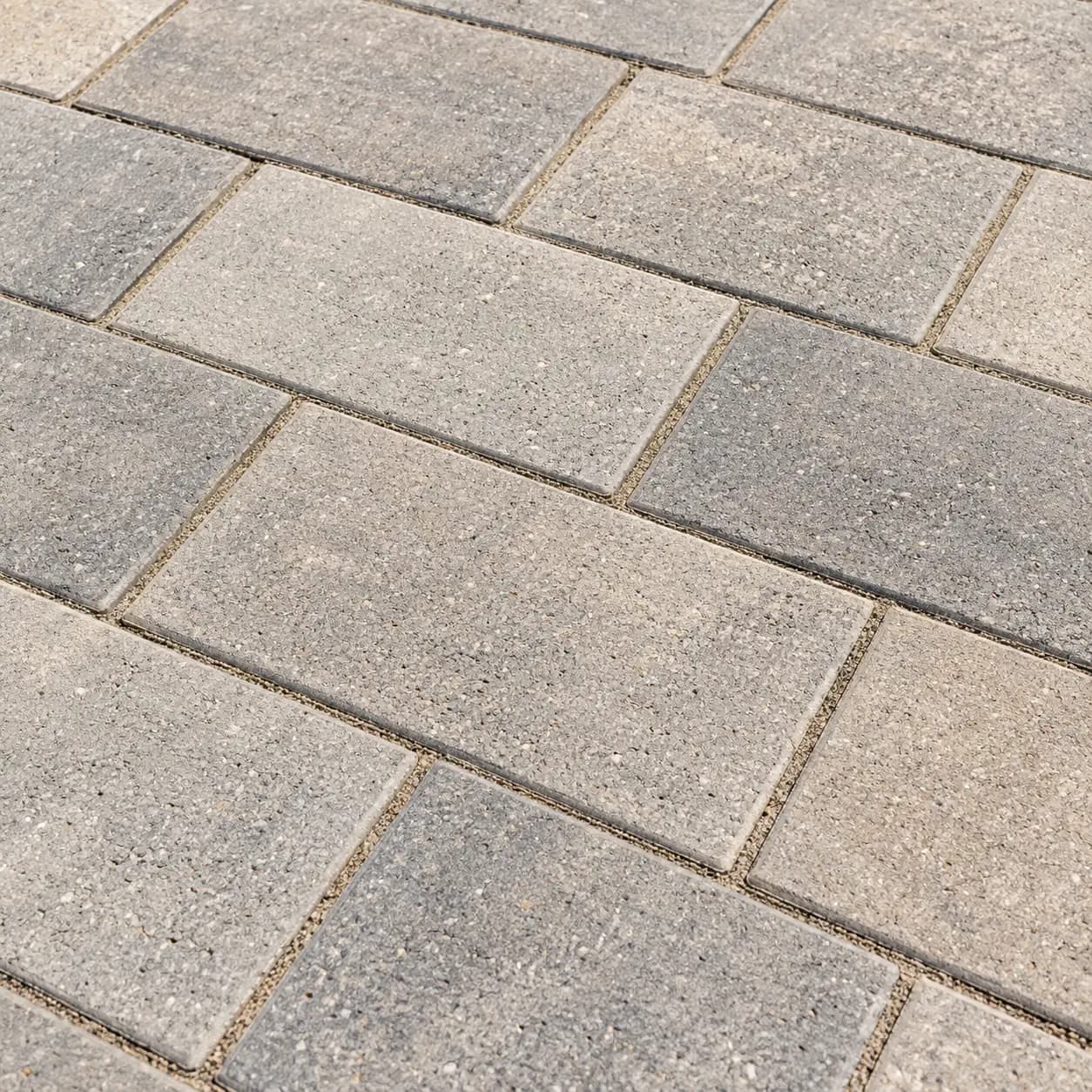
Names such as herringbone, running bond, and basket weave describe arrangements of paving units. Ask to see the actual layout instead of relying on a name. Products with different shapes or sizes may offer their own arrangements. For vehicle areas, explain how the surface will be used and ask which product and pattern are suitable for the proposed installation.
Give the border a clear purpose
A border can mark the perimeter, separate sections, or frame a change in material. Decide whether you want it to stand out or blend into the main surface. Ask to see border and field pavers together because their contrast can change beside the colors of your home.
- Will the border continue around every edge?
- How will it meet the garage, house, or existing walkway?
- What happens at curves and corners?
- Does it distinguish a walking route or another section?
- Will its width remain visually consistent through narrow areas?
Ask about edges beneath the appearance
A decorative border and an edge restraint serve different purposes. The border is part of the visible arrangement. An edge restraint is a construction detail that helps contain the paving units.
CMHA guidance describes edge restraints as part of maintaining interlock and resisting lateral movement. Ask how proposed edges will be handled where paving meets a lawn, planting bed, or existing surface. Do not assume the decorative border also explains the construction at the perimeter.
Review samples where they will be installed
Place samples near the exterior and view them from the street, doorway, and patio seating area. Look at them in daylight and shade when practical. Small samples help with color selection, but they cannot show every variation across a finished surface.
- Main paver shape and available pattern.
- Field color beside the house.
- Border color beside the field paver.
- Transitions to existing paving.
- Treatment of curves and narrow areas.
Record the choices before approving the layout
Ask the proposal to identify the selected product, pattern, field color, border treatment, and project limits. Clarify which choices are final and which still require samples or a site review.
Review entrances and transitions on the layout with the contractor. If you change the border or pattern after comparing samples, update the record so everyone works from the same selection. Keep approved references with the estimate.
Sources and further reading
References used to support this guide.