
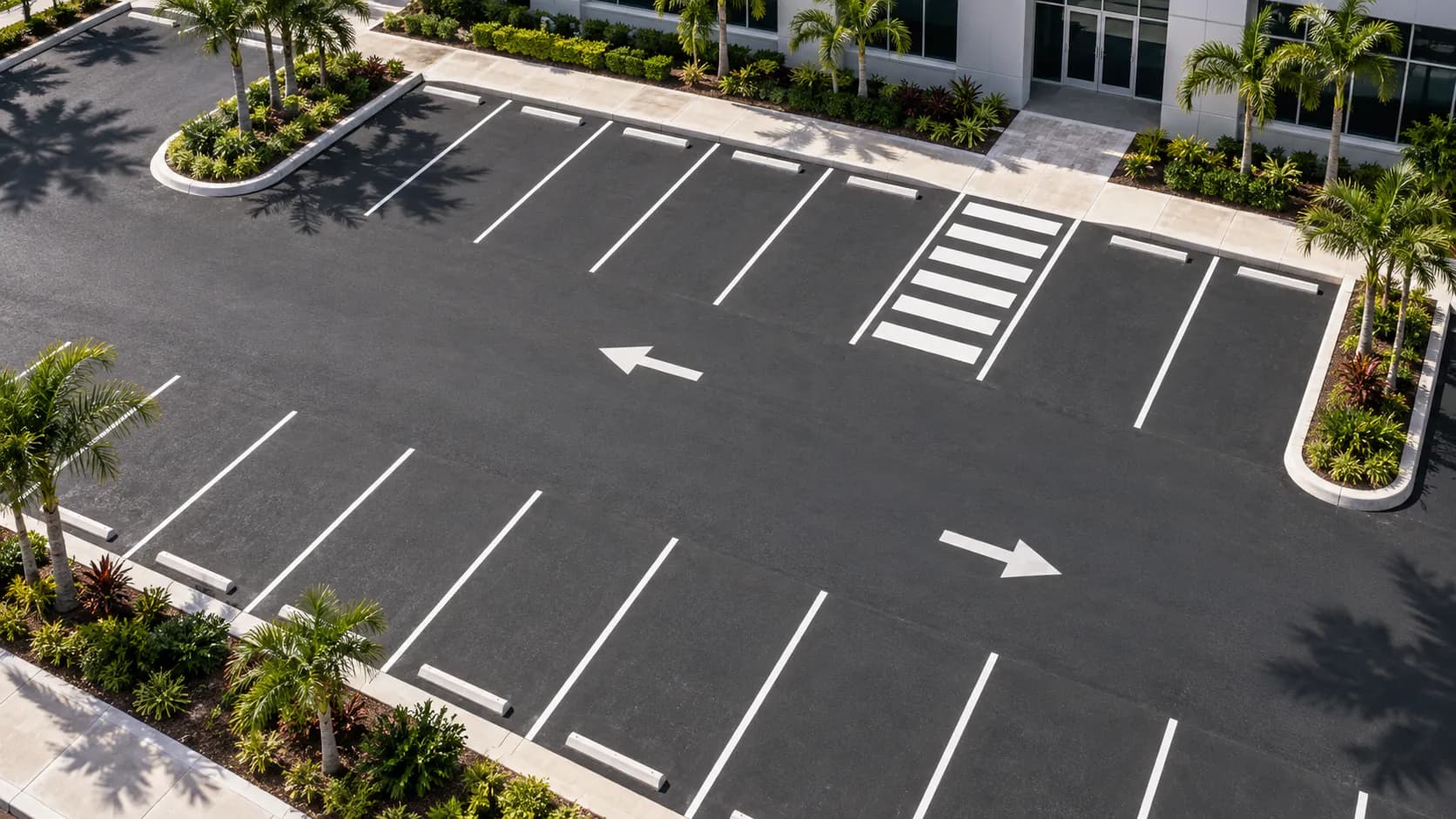
Describe how the property operates
A parking lot proposal should begin with the activity the site needs to support. Record customer arrivals, employee parking, deliveries, service vehicles, pedestrian routes, and access to building entrances. Include areas used for loading, waste collection, or equipment access.
Discuss when these activities overlap and which parts need to remain available. A quiet section during one site visit may serve another purpose later. Share a simple operating map and identify the person who can resolve questions about tenant needs or business access.
Separate surface work from layout changes
Identify whether the project replaces a surface, changes parking arrangements, or does both. A paving proposal does not automatically explain changes to markings, pedestrian connections, signs, loading areas, or accessible spaces.
Mark work boundaries and retained areas on a drawing. Ask which transitions and adjoining repairs are included. If the layout will change, identify who prepares and reviews the plan before installation or striping. Keep the reviewed layout with the scope so both parts follow the same document.
Review accessible parking as a connected route
The U.S. Access Board parking guide addresses accessible spaces, access aisles, identification, and connections to accessible routes. These elements need to be considered together when reviewing a parking layout.
Ask the responsible designer or reviewer to examine the spaces and the route people use to reach the entrance. Include crossings, curb transitions, and temporary access during the work. Repainting an existing symbol does not describe the full arrangement. Establish who verifies applicable requirements and records the final layout.
Assess drainage and existing conditions
Document places where water collects, pavement has been repaired, or transitions create operating problems. Share photographs taken under different conditions when available. FHWA guidance provides background on the relationship between the surface, supporting components, and drainage design.
Ask how the proposal addresses these observations and which assumptions require further evaluation. EPA stormwater information adds context for runoff planning. Identify who reviews site-specific questions. If permeable pavement is considered, request the proposed system, the reason for selecting it, and the maintenance responsibilities.
Build a usable phasing plan
The work sequence should explain how vehicles and pedestrians reach the property as sections close and reopen. Review it with the people responsible for operations before work begins. Share changes through an agreed contact instead of expecting visitors to infer a route.
- The work area and available parking for each phase.
- Customer, employee, delivery, and pedestrian access.
- Temporary signs and the person responsible for updates.
- Access to entrances, loading areas, and service equipment.
- The contact who resolves an unexpected access problem.
Assign completion and maintenance responsibilities
The proposal should specify removal, disposal, preparation, surfacing, transitions, markings, signs, and drainage work where applicable. Identify exclusions and the approval process for conditions discovered during removal.
Before handoff, establish who reviews the finished work against the agreed scope and records unresolved items. Request the final layout, care instructions, warranty documents, and follow-up contacts. Assign ongoing inspection and maintenance responsibilities within the property team.
Sources and further reading
References used to support this guide.